
Reviews, Interviews, and Mentions
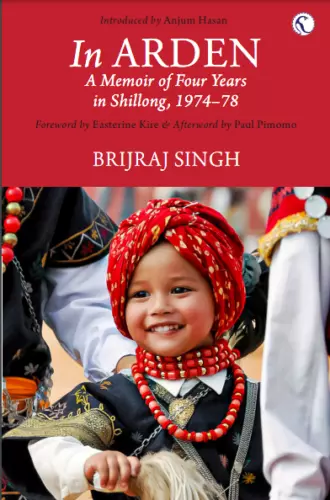
“Newly married, my wife and I went to teach English at a newly established university in north-eastern India. During our four years there, we made many friends, getting to know some unique features of the countryside, as well as the tribal culture of the locals who were fast modernizing. These memoirs try to communicate, as vividly as I can, my experiences, discoveries, and disappointments. So here is a somewhat unusual introduction to the Khasi Hills, its people, and those years, which should interest everyone who wishes to discover more about a fascinating part of India that is still too little known.” – Brijraj Singh
. . . a vivid remembrance . . . written with empathy and insight . . . . sensitively drawn portraits of individuals from all sections of society, of landscapes urban and rural, and of animals too . . . . a wry sense of humour and a sharp eye for pomposity. Evocative without being sentimental.
– Ramachandra Guha, historian and public intellectual
A classic of the times, and a classic of Shillong.
– Malsawmi Jacob, the first Mizo novelist in English
Undoubtedly makes the author the cultural ambassador of Northeast India to the wider world.
– Varghese Mathai, former Fulbright Scholar; Professor of Doctoral Writing, Judson University, USA
A delightful memoir ….Opens a floodgate of memories of people and places that come back to life ….narrated with an openness and honesty that reflects a love and zest for life, for the place and people. Any reader is sure to enjoy the flow and mastery of language that describes what seems like a lifetime of adventure, curious encounters, interesting personality studies, love of nature, disappointments – all packed in the span of just four years.
– Margaret Ch Zama, retired Professor of English, Mizoram University
The book feels like postcards from the past, yellowed with time. For the 21st-century Shillongite, sepia-tinged characters greet us, as we smile at them.
– Adity Choudhury, reviewing the book in The Meghalayan magazine, November the 12th, 2022 https://themeghalayan.com/a-postcard-of-remembrance/
“Brij’s observations about the individuals he writes about are kind, generous; and his comments, when on the unflattering side, are strikingly fact-based and evidence-based. He is never evasive. This memoir has integrity of spirit, and integrity in the delightfully forthright texture of its writing.
-Dr Paulus Pimomo, Professor of English, Central Washington University, USA
. I learned about the founding of Shillong by the British in the 19th century, the institutions they started, and what have stayed and what have changed a century later, in the late 1970s when he lived there. People don’t generally think of Shillong as a place they can get to interact socially with the governor and top bureaucrats of the State, but Brij does, and yet he also gets to negotiate the price of pineapples in rudimentary Khasi with the local vendors, and he goes to work daily with the region’s leading academics at the only university in the State back then. And what makes Brij’s memoir so special is that they are all — from the governor on down — spoken for with keen fascination, empathy, and honesty.”
-Dr Paul Pimomo, Professor of English, Central Washington University, USA


Jelle J. P. Wouters –
Review of In Arden, A Memoir of Four Years in Shillong, 1974-1978. Sutton: Pippa Rann Books.
by Jelle J.P. Wouters
Brijraj Singh, accompanied by his wife Frances, spent four years in Shillong in the 1970s as a Reader in English at the then newly established North-Eastern Hill University (NEHU). In Arden: A Memoir of Four Years in Shillong, 1974-78 presents his autobiographical reflections on this period. While Singh went to Shillong to join the university, he also arrived with the expectation “to find tongues in trees, books in the running brooks, sermons in Stones…” His penchant for literature reveals in the book’s Shakespearean title, In Arden. Arden was the maiden name of Shakespeare’s mother, Mary, as well as relates the Forest of Arden in which Shakespeare’s pastoral comedy As You Like It unfolds. In Shillong Arden became the name the Singhs gave to the bungalow where they resided.
Across seven chapters, this book invites us to the pine-clad, rolling hills of Meghalaya, the town of Shillong, and to the classrooms and corridors of NEHU of half-a-century ago. Singh tells us about the places he and his wife visited, the colourful people they met and befriended, their encounters with the local Khasis, and the woes of NEHU, which was “to be the brave new academic world of the future” (p.25). In Arden is graced by an introduction, foreword, and afterword by three literati who also have Shillong woven into their life-histories. They are the novelists Anjum Hasan and Easterine Kire, and the scholar Paul Pimomo.
In Arden is a riveting read and written with flair. The gravity of its contribution lies in offering a window into a time-period comparatively little written about, which is the first decades after independence and the years immediately following Meghalaya statehood in 1972. My positionality in commenting on this book is the centrality of Shillong in my own educational odyssey. I first arrived in Shillong 32 years after Brijraj Singh did, initially as an exchange student in 2007-2008, and later as a PhD candidate from 2011 to 2015. This now allows me to highlight, in this review, a number of changes, continuities, and changing continuities between the Shillong of the 1970s and the present-day. I joined NEHU’s PhD programme in Anthropology after the completion of an MPhil in the same subject from the University of Oxford. Back then, I was the single overseas student enrolled as a full-time PhD student in NEHU, even as the university attracted a near continuous stream of visiting students and scholars from around the world and who looked at the university as a springboard into Northeast India. Like Brijraj Singh, I developed a deep fondness for the city.
Compared to most other parts of India, Shillong experienced a slow process of decolonization. This was not only because its tribal Khasi, Garo, and Jaintia communities felt anxious about what Indian futures would hold for them, but also because British colonial officers, tea-planters, and other settlers were reluctant to leave these hills they had come to call home. This was not infrequently because they had married locally. Singh noted the distinctive progeny of these British-Khasi unisons in the 1970s: “There is a large number of men and women in Shillong today, all in their late thirties and early forties, who obviously had one white parent.” (p. 153). There was, in the 1970s, also still a vibrant community of colonial leftovers consistent of retired British civil and military officers, tea-planters, businessmen and missionaries. The latter co-established many of the Colleges that have long attracted students from across the region and which painted Shillong in a cosmopolitan gloss. In the 1970s these living colonial remains struggled to navigate between the privileges they had enjoyed during colonial rule and the realities of living in a new and independent India.
This community included the Englishman Mr. Booth, from whom the Singhs rented the bungalow they baptized Arden. Mr. Booth has started out as a tea-planter in Assam, then joined the Assam Civil Service as a colonial officer, and during the Second World War served as a Captain in Burma. Mr. Booth was a jovial man full of stories: “He had known many men, ranging from British governors to Naga headhunters, and often regaled us with anecdotes connected with them.” (p. 71). Mr. Booth did not follow the British Crown back to England in 1947, but instead found himself entry into the Indian Administrative Services (IAS), and worked his way up to become Deputy Commissioner of the Khasi Hills, a post he held between 1953 and 1957. If the idea of a British national holding such an elevated post after India’s independence seems out of place, it was not so in Northeast India where several colonial officers opted, and lobbied, to stay put. Their initial replacements in the region were oftentimes Anglo-Indians, and so by popular demand. Jawaharlal Nehru once remarked for the Naga, but cognizant of a then wider sentiment and trend in Northeast India: “Fortunately or unfortunately the only administrative officers whom the Nagas trust are the Anglo-Indians, and unfortunately we do not have enough Anglo-Indian administrative officers” (cited in Stracey 1968, 63).
Besides Mr. Booth, the Singhs were fortunate to meet several other distinguished individuals who were central to the political and intellectual history of Shillong and Northeast India. Chapter 3, titled “friends”, details many of these encounters and friendships. Their social circle included the Cambridge educated maverick Nari Rustomji, a name that continues to echo in the region’s academia and administration. Rustomji continued the colonial tradition in which officers were also intellectuals and authors. His most widely read books include Enchanted Frontiers: Sikkim, Bhutan, and India’s Northeastern Borderlands (1971) and Imperiled Frontiers: India’s Northeastern Borderlands (1983). Rustomji spent his entire service career in and around Northeast India (an unusual feat, both then and now), touching all its states and holding various influential posts, including that of Meghalaya’s first Chief Secretary, as well as was the Dewan of then still independent Sikkim and advisor to the King of Bhutan. Singh found Rustomji “totally eccentric” (p. 105), variously because of his “unusual style of dressing” (then appearing in Sikkimese dress, then wrapped in a Naga shawl, then in a Madras Jacket, then in an English suit), his habit to squat on the floor instead of sitting on a chair, his refusal to sit on any dais, and his tendency to now and then stand on his head during a social gathering. For those of us who read and think with Rustomji even today, anecdotes like these are regaling.
The Singhs also befriended L.P. Singh, the then Meghalaya governor, in whose company they spent several evenings, as well as hosted the famous Austrian anthropologist Christoph von Fűrer-Haimendorf. As an anthropologist myself, I cannot help but point out that his name is misspelled in the book as “Fuhrer Heimendorf.” The word “Fuhrer” is particularly awkward given its Nazi connotations and Haimendorf’s own staunch anti-Nazi stance. In fact, Haimendorf spent the entire Second World War in India. Then in the possession of a German passport, he was first arrested by the British colonial government but soon released and allowed to carry out anthropological fieldwork, first in Hyderabad and later in the North-Eastern Frontier Agency (NEFA), now Arunachal Pradesh, where he was commissioned as Assistant Political Officer. Based on the many friends they met, of which this book shares delightful descriptions, Singh concludes that “one of the glories of Shillong is that it shelters an uncommonly large number of odd-bods, cranks, eccentrics and otherwise colorful personalities” (p. 113). This continues to be part of Shillong’s glory fifty years later. Compared to any other city of roughly the same size, Shillong seems to have a particular knack of nourishing intellectuals, writers, musicians, composers, and artists of many kinds.
Throughout the book Singh observes and comments on changing moods, trends, and problems in the city. Many of these continue to be discernible today. This includes the “great irony” (p. 144) that the world’s rainiest place, which are the villages in and around Cherrapunji, suffers from a structural shortage of water. This shortage, if anything, has only augmented and despite that Shillong has a professional class of umbrella-repair men, and it indeed rains every other day, the city is often “dry.” I remember how during my first spell in the city the pipes usually gave water for about 30 minutes a day. During this limited interval, we would collect as much water as we could to use it for drinking, cooking, and washing until water would flow from the pipes next. This scarcity is not to be entirely blamed on the Meghalaya government. The geomorphological and geological arrangement of the land is such that rainwater doesn’t soak into the soil but straight drains to irrigate the wetlands of Assam and Bangladesh.
Singh’s remark that “Shillong has grown tremendously in recent years” (p. 159) has also only accelerated. But if in the 1970s, the famous Assam style bungalow was still “the dominant architectural style all throughout the city” (p.74), today only some leftover government quarters and a few old churches inhabit this style. Shillong has now transformed into a concrete labyrinth of smaller and bigger buildings and apartment blocks, built high and roof to roof, and connected by narrow roads near-continuously jammed by traffic. Once settled in Shillong, it did not take me long to realize that at certain times of the day walking tends to be a great deal faster than taking a bus or taxi, even if the distance to be covered is not altogether short.
Singh describes how Shillong, in the 1970s, had firmly established itself as the prime educational hub of Northeast India, and how it was a meeting ground for communities across the region, especially from the hills of Nagaland, Arunachal Pradesh, Manipur, and Mizoram. Many leaders in the region today, whether politicians, senior bureaucrats, or rebel leaders hold degrees obtained in Shillong. While Shillong continues to be a major educational hub, what might have changed are some of the attitudes of Khasi landladies (ladies in reference to the Khasi matrilineal tradition in which property is inherited and owned through the female line). Whereas Singh observed that Nagas were the most favourite tenants “because they keep their houses clean and pay the rent on time” (p. 162), and where not frequently afforded a deduction in rent, today this fondness seems to have somewhat eroded.
While living in Laban, an erstwhile Khasi village absorbed into the expanding city, as a tenant of a Khasi landlady, I was told that I could have any visitors, except for Nagas for whom she had obviously developed a dislike. As I was in urgent need for housing, and as a novice to the city and Northeast India had little idea then about its ethnic tribal composition, I took the room and promised that no Naga would enter it. However, when I soon realized that many of my classmates and friends were actually Nagas and thus could not invite them home without defaulting on my rent agreement, I had no choice but to vacate the place. I moved to another part of the city and rented two rooms, incidentally with a Naga classmate, from a Khasi landlady who obviously had no qualms about Naga tenants. To the contrary, the apartment next door, which she also owned, was occupied by a Naga family, and she would regularly invite all us tenants upstairs for tea.
While the book relates the affection Singh developed for Shillong, in the preface he offers an advance apology for “some rather uncharitable remarks about the provincialism and insularity of some professional middle class Khasi” (p. 20). He is indeed uncharitable when he variously generalizes Khasis as “provincial”, “limited”, “uninspiring”, and “uninteresting.” He also found them “unduly full of expressions such as ‘We Khasis’, with them insisting that theirs was a great society which others couldn’t understand’” (p. 125). This experienced Khasi parochialism nourished a sharp us-them divide and which had seeped into the university. Chapter 6, titled “work”, details Singh’s experiences in NEHU, which clearly frustrated and disillusioned him.
Singh highlights the inherent tension between the cosmopolitan and inclusive vision of the university, as spelled out in its statutes and ordinances, and the encountered Khasi conviction that the university was theirs. The North-Eastern Hill University Act, 1973, projects NEHU as a university in its universal sense of providing excellence in teaching and research, with the additional responsibility, to quote the Act verbatim, “to pay special attention to the improvement of the social and economic conditions and welfare of the people of the hill areas of the North-Eastern region, and, in particular their intellectual, academic and cultural advancement.” Thus while the university was headquartered in Shillong, it was never established only for Shillong, the Khasis, or even for the state of Meghalaya, but was part of a larger vision of servicing especially the hilly regions of Northeast India. Singh found that this broad vision was continuously contradicted and undermined in practice. He thus recalled how a Khasi politician was a frequent visitor to the English Department where he exhorted students about NEHU being specially established for the Khasis, thereby implying that “‘Foreigners and outsiders’ had no real place in the set-up.” While so-called Khasi parochialism was intensely present in the 1970s, both in and beyond the university, in the preface Singh remarks that “there is no question but that today those attitudes have dissipated” (p. 20). I am not altogether sure they have. One could as easily argue that they have in fact intensified further. Certainly also so in relation to the university.
1978, the year Singh left the university, saw the establishment of the Khasi Student Union (KSU) with the objective of safeguarding the rights of the Khasi community. Its NEHU there is a KSU cell, besides NEHUSU (NEHU Student’s Union). NEHUSU is a disguise because the nomenclature suggests that the union represents all NEHU students whereas in reality all office-holders are near-exclusively Khasi, as are the interests they primarily represent. There has been little room for “outsiders”, whether tribal or nontribal, in this not-so representative student body. During my time, NEHUSU and the KSU cell not only kept a close tab on everything related to the university, but it was widely known that they regularly sought to intervene in its functioning, for instance by submitting memorandums for a Khasi Vice-Chancellor to be appointed, by “visiting” department heads to discuss admissions (asserting a formally non-existing Khasi quota), and by repeated calls for the privileging of Khasi faculty in recruitment drives.
Their attempted patrolling of the university led to occasional incidences of intimidations, threats, both veiled and not-so-veiled, discrimination, and the maltreatment of “outsiders”, all the more so against students from the plains. It was hardly a coincidence, for instance, that students from the plains disproportionally resided in the damp and smaller down-floors of hostels, whereas Khasi students disproportionally occupied the more spacious, airier, and cleaner rooms on the upper floors. While it was formally the university which allocated hostel rooms, and did so indiscriminately, inside the hostels room allocations were readily rearranged by Khasi student leaders, and usually with the implicit consent of hostel wardens. I came to know some NEHUSU office-bearers quite well, and they were perfectly cosmopolitan as individuals. However, when they united as NEHUSU/KSU they ardently advocated a “Khasi first”, if not sometimes also “Khasi only”, vision for the university. During my years of stay in the university I had a few unfortunate run-ins with this attempted Khasi-first policy. I shall detail only one such run-in here.
I distinctly recall standing in front of the hostel room freshly allocated to me and found the door locked from the inside. I took the university letter, signed by the Dean of Students’ Welfare, out of my bag. Perhaps I had misread either the name of the hostel (The Japfu Halls of Residence, named after the Japfu peak in Nagaland) or the room-number. I had not. I was indeed standing in front of the room assigned to me. I knocked on the door. A Khasi student, or rather a former student as he had graduated months ago, opened the door. I handed him the letter. He wasn’t impressed. “I won’t be moving out for some time”, he said curtly as he returned the letter to me. Before I could so much as protest he had already closed the door on me. The encounter left me both befuddled and without a place to sleep.
“He is a Khasi student leader. They think they rule this place. Actually, they often do”, a friend, to whom I had gone with my troubles, explained me. “You shouldn’t”, he advised as I told him about my intention to complain to the hostel warden. “The warden is an outsider himself. He won’t wish to intervene and antagonize the Khasi students over such a small issue as is your hostel room. Moreover, you don’t wish to antagonize the Khasi students yourself.” “Your best option”, my friend continued, “is to knock on the door a few times a week, and every time politely inquire into his plans of vacating. Meanwhile you can stay in my room.” I followed the advice given to me and knocked on “my door” a few times a week. “I will see”, or a variant therefor, was the standard reply I received. It took close to two months before, one day, I found the room unlocked and empty. I immediately took my entrance, as well as changed the lock. I was hardly the only non-local student who faced such or similar issues, and found themselves up against an unofficial yet powerful “Khasi-first” policy within the walls of the university.
Now, it would be quite unfair to pinpoint NEHUSU, the KSU, or the Khasi students in general for trying to appropriate the common good, as is a Central University, into their own ethic tribal community-resource. While this politics of identity and rights is very palpable in relation to NEHU and Meghalaya, it is part of a wider social trend in Northeast India in which notions of ethnicity, indigeneity, and autochthony have become the main grinder of education, administration, politics and governance, and of social life itself. In the 1970s, Singh already noted how Khasis have “a strong fear of being outnumbered in their own State” (p. 161), and took resort to legal mechanisms to prevent non-Khasis from enlarging their footprint, for instance by prohibiting them from buying property in Shillong. This legal warfare against those who don’t ethnically belong has certainly only intensified since. In recent years, this sentiment translated into a locally agitated for Inner-Line and an attempted bill (not successful, as yet) to punish Khasi women who marry non-Khasis by delegitimizing their children as non-Khasis. Again, this is part of a larger contemporary trend in Northeast India which witnesses, now more than ever, a preoccupation on part of communities with the protecting, patrolling, and legislating of their tribal and territorial identities and rights. In Arden is particularly revealing in detailing the early beginnings of this contemporary mood.
When reading In Arden as an anthropologist, the book occasionally makes you cringe, especially with phrases such as “The Khasi has not contributed to the culinary arts of India” (p. 218), “Khasis can’t always hold their liquor well” (p. 221), ‘The Khasis are also great smokers” (p. 223), and “Khasis have failed to indigenize their Christianity. (p. 197)” But of course Brijraj Singh nowhere claims to offer an ethnographic account, and judging it by those elevated standards wouldn’t therefore be entirely fair. Singh simply wrote about what he saw, the people he met, and the thoughts he developed about Shillong and the Khasi, and while all of these are evidently coloured by his own background and worldview, it is ultimately his plain honesty – “here all gloves are off” (p. 18), as he put it himself – that makes In Arden quite the enjoyable read.
References:
Rustomji, Nari. 1971. Enchanted Frontiers: Sikkim, Bhutan, and India’s Northeastern Borderlands. Bombay: Oxford University Press.
Rustomji, Nari. 1983. Imperiled Frontiers: India’s Northeastern Borderlands. Bombay: Oxford University Press.
Stracey, P.D. 1968. Nagaland Nightmare. Bombay: Applied Publishers.