New Delhi, July 17, 2025:
Trump’s Resurgent Trade Wars: Will and Can the World Unite Against Them?
The time has surely now come for countries, erstwhile allies and foes of the US alike, to unite in the Geneva corridors of the World Trade Organization (WTO) and in other appropriate forums against the tariff tantrums and wars of President Trump and his loyalist henchmen and henchwomen. If they do not, they will not just be placing their own countries and economies at risk and in jeopardy but they could fatally damage the global economy and post WW2 liberal world trade order founded and first anchored in the 1947 United Nations (UN) General Agreement on Tariffs and Trade (GATT) and in the World Trade Organization (WTO) from 1995 which succeeded it exactly three decades ago this year.
Trump’s Resurgent Global Tariff Wars
With his “Liberation Day” tariff pause from April 9 till July 8 now over, President Trump has once again begun unleashing even higher tariffs on some countries than the ones he had earlier unleashed on April 2. Some of these, for example the ones threatened on Brazil, Laos and Myanmar, are even more economically nonsensical than those, announced on “Liberation Day”, if that is possible.
It is also now increasingly clear that the President only paused his global tariff war in April because of the serious, negative response of the Treasury bond market in April. He never intended to seriously negotiate bilateral agreements with “200 countries” during the 90 days pause, despite what he and his loyalist Treasury and trade advisers repeatedly said. This was impossible to do in such a short period, in any case, as everyone who has been involved in serious trade negotiations knew from the beginning of this period.
If one excludes the very broad framework agreement with China as we must because it is essentially a very broad political agreement only, not really a trade agreement, a paltry two framework trade agreements, with the UK and Vietnam, appear to have been concluded in the three months before July 9, with the Vietnamese one now in serious doubt, leaving only the very modest and uninspiring one with the UK as an example. The Vietnamese, on the other hand, say that they thought they had agreed with US trade negotiators on 11% tariffs for their exports into the US in exchange for their zero tariffs for US exports to Vietnam. Instead, President Trump publicly announced 20% US import tariffs, leaving the Vietnamese aghast and his own trade negotiators both embarrassed and undermined and difficult to trust.
Despite this obvious failure, President Trump appears to view high tariffs as his first order strategy or tactic to address all his concerns, for all countries, occasions and seasons. As Martin Wolf wrote on 15 July in London’s Financial Times “like a dog to a bone, Donald Trump always returns to tariffs.”
He has often referred longingly to the days when William McKinley was US President, talking about how his tariffs made the US rich. To quote him on McKinley, “he was the tariff king, but he was very, very strong. It (the US) was an all-tariff country…. we had so much money we didn’t know what to do with it.”
However, as Aroop Mukharji wrote in a March 2025 Foreign Policy article, the high tariffs promoted by Mckinley “does not suit today’s world. During the Gilded Age, “tariffs were a normal part of politics,” but now they are an aberration in the “globally integrated world.”
Thus far, in this new round of Trump tariff announcements which began on July 7, two days before his self-imposed deadline of July 9, President Trump began by targeting and sending letters to Japan and the Republic of Korea, supposedly close US allies, slapping both with 25% tariffs across the board on their exports to the US. The same percentage tariffs were extended to Malaysia and Kazakhstan later in the week.
A total of 23 countries had received similar letters by July 10 with many more promised in the next few days and weeks before end-July. The other countries who had received letters by then included but were not limited to Thailand (36%), Indonesia (32%), Philippines (20%), Bangladesh (35%), Cambodia (36%), South Africa, Sri Lanka, Algeria, Iraq and Libya (30%) and Brunei and Moldova (25%). Viciously, exhibiting utmost cruelty, the most vulnerable and conflict-ridden countries with very small trade surpluses with the US had the highest tariffs placed on them in the first list of 23 countries: Laos and Myanmar at 40% had the highest so far excluding the 50% threatened against Brazil a few days later. Laos is very poor, with a real GDP per capita just 11% of US levels with a bilateral trade surplus with the US of only $0.8 billion in 2024. It is particularly vicious, shameful and cruel for the US to tariff Laos because, as CNN has stated, “from 1964-1973, the US dropped more than 2 million tons of bombs on Laos”— more than on Germany and Japan combined in World War II.
These new tariffs are to be effective from August 1 for all countries. Canada (35%) got its letter on July 10 while both the European Union (EU) and Mexico were slapped with across-the-board tariffs of 30% on July 12 (with exceptions for products covered under the US-Mexico-Canada Agreement— the USMCA). The ostensible reason for these high tariffs on Canada and Mexico is because of fentanyl and other narcotics coming across their borders into the US which Prime Minister Carney of Canada has referred to as negligible.
President Trump has also now indicated that 15 or 20% across-the-board tariffs will be placed on countries that do not receive individual letters. The new tariffs, therefore, are expected to be higher for all countries compared to the 10% across-the-board tariffs placed on countries on April 2. This will be true even for countries with whom the US had significant trade surpluses. President Trump has also warned that countries which respond with their own tariff increases or other countermeasures will be slapped by the US with an additional identical tariffs or other countermeasure.
Some commentators believe that the approximately three-week interim pause between the new announcements starting July 7 and August 1 when they are to go into effect “appears to be a calculated negotiation tactic, designed to increase the pressure on trading partners to accelerate talks and offer the US deeper concessions.” The early evidence of this is the newly announced “deal” that President Trump announced with Indonesia, in which, in exchange for zero import tariffs across the board and Indonesia’s willingness to purchase 50 Boeing aircraft, remove duties on agricultural products, buy $4.5 billion in agricultural products and $15 billion of US products and sell it copper which is desperately wants, Trump has decided to slash Indonesia’s export tariffs to 19% from the 32% unilaterally announced by him just a few days earlier. Thailand is also reportedly said to be willing to offer zero tariffs on 90% of US goods, up from 60% earlier, in order to make a “deal.” Using, Vietnam, Indonesia and Thailand, the US seems to have set ASEAN members against each other in a beggar-thy-neighbour competition, undermining ASEAN unity and even one of its most important reasons for existing.
Despite this, threatening countries with high tariffs does not seem like a credible strategy to reduce the US’ trade deficit, since the list so far, with few exceptions like the EU, is littered with names that the US stands little to gain from. Countries like Indonesia may be able to reduce the new export tariffs announced before July 10 by a third to around 20% by offering zero import tariffs but this will prove very costly for their short, medium and long-term development. Other countries, like Thailand, even if they capitulate to Trump’s demands in the next three weeks, will have little impact on the US’ overall trade deficit numbers which have grown even larger during Trump 2.0 because of both his trade and fiscal policies.
In addition to country specific tariffs, Mr Trump has also unilaterally levied 50% tariffs on US copper imports from August 1 using national security grounds and threatened Brazil with 50% tariffs across the board unless the judiciary in that country abandons the 2022 failed insurrection related trial of his soulless mate, previous Brazilian President Bolsonaro. This is unabashedly both political and personal, not economic policy related, since this trial in Brazil must be too close for comfort for President Trump and his loyal henchmen and henchwomen, given that his supporters staged a similar, also failed insurrection on Capitol Hill in Washington DC on January 6, 2021. Indeed, the Trump 1.0 and current White House Trade Adviser, Peter Navarro, was jailed as a consequence of that till he was pardoned by President Trump after he returned to the White House in January 2025. Nobel Economics Laureate Paul Krugman has aptly named this as part of Trump’s “Dictator Protection Program.” It should also be noted that Trump has no legal authority to use tariffs for such a purpose.
President Trump has also threatened 10% additional tariffs on all BRICS members and partners on top of what he has already announced for them individually, or will announce for them, for example, India soon. He has said these additional tariffs will apply, with no exceptions on “any country aligning themselves with the Anti-American policies of BRICS.” This emerging and developing country grouping, whose original members were Brazil, Russia, India, China and South Africa, now has a greatly expanded membership or close partnership with around 15 countries, after the recent Brazil Summit This includes both Vietnam whose recent alleged agreement with the US remains under a cloud and uncertain, and Indonesia. This new tariff threat came immediately after the July 6 BRICS Rio de Janeiro Summit Statement, and it is not clear whether and if this will additionally apply to the “deals” with these two countries and other BRICS members.
The US President has also threatened tariffs of 200% on pharmaceutical imports into the US after a year or so unless pharmaceutical companies relocate to the US before then and manufacture behind its high tariff walls. These new tariffs are in addition to his earlier announced and already implemented tariffs of 25% on auto, aluminium and steel for all countries raised to 50% on aluminium and steel for Canada from June, and 30% across the board (54% de minimis) on China and 10% across the board on almost all other WTO members. These remain in place till at least August 1.
In addition, there is the Sanctioning Russia Act, 2025, introduced in the US Senate this April by Senator Lindsey Graham, a close political ally of Mr Trump. It has now gathered the bipartisan support of 80 Congress members, and which seeks to levy punishing tariffs on Russia and those who trade with it. The President is now sympathetic to this and recently threatened to impose “very severe tariffs” on Russia if there was no peace deal regarding Ukraine in the next 50 days. He also threatened additional “secondary tariffs” at around 100% on countries buying Russian energy products and other goods. This would target China, India, Turkiye, Brazil and other emerging countries of the Global South in particular, but also some European buyers of Russian discounted oil.
Mr. Trump’s remarks on this came as he met NATOs Secretary-General Mark Rutte at the White House late last week. Quite unprecedented, Mr Rutte sent a message to China, India and Brazil straight after effectively asking them to put pressure of President Putin to relent if they did not want to be placed under 100% US secondary tariffs and sanctions. Such tariffs have a different rationale, represent another category and are arguably more justifiable because they specifically target countries who purchase Russian oil and other products and have and continue to violate US sanctions by providing crucial resources for Putin’s Russia to continue its civilian and other killings through his continuing illegal war in Ukraine, now in its fourth year. Notwithstanding this, such gargantuan tariffs will add a huge new oil tariff flank to the ongoing global trade wars, with significant negative global economic consequences.
The magnitude of Trump 2.0s WTO rule violations is entirely without precedent. As Jeff Colvin, President of the US’ National Foreign Trade Council which lobbies on behalf of international business said after Trump’s April 9 pause on tariffs, it was “shocking how far the centre of gravity has moved on the tariff conversation. Back when the president floated the idea of a universal baseline tariff a year ago as a candidate, everyone was aghast at how dramatic that would be. And now, there’s almost relief by companies and businesses that a 10 percent baseline tariff might be the best they can get.” Both this baseline and average will now clearly be much higher after August 1.
If most or all the new tariffs go into effect on August 1, as is now more than likely unless they are quickly and irrevocably stopped by the New York-based US Court of International Trade (USCIT), a tall order in such a short time frame, they will almost certainly put the global economy on a recession path, bringing back bad memories of the early 1930s when the spread of trade protectionism spurred by the US’ Smoot- Hawley Tariff Act exacerbated the Great Depression.
Ernie Tedeschi, the Director of Economics at the non-partisan Budget Lab at Yale University has provided compelling data to substantiate this view. The Lab’s calculations indicate that the US’ effective tariff rate on imported products went up from just 2.5% at the beginning of 2025 to 18.7% after the first lot of tariff letters the President issued last week (they were already 8.8% in May). This was even before the new tariffs on Canada, Mexico and the EU, the US’ three most important larger volume trading partners, were announced. That is the highest average US tariff rate since 1933, on par with the Smoot-Hawley tariff peaks that worsened the Great Depression.
Moreover, while the Trump government expects to raise $300 billion in revenue from the President’s tariff war, the higher prices in the US resulting from the increase in tariffs from imported goods could set back US household incomes by even a greater amount. Last week, Scott Bessent, US Treasury Secretary, said that the US, so far, had received $100 billion in tariff income in 2025 which will triple by end-2025 after the new tariffs go into effect on August 1. Against this, Yale’s Budget Lab estimated that all tariffs levied until July 9, assuming they stay in force in perpetuity, will lead to a 1.8% increase in prices in the short run which is equivalent to an annual income loss of $2367 on average for each American household per annum. This assumes no change in the Fed’s interest rate policy. Using the US Census Bureau’s estimation of 127 million US households, this translates into a loss of $302 billion per year, even before the new much steeper tariffs expected to come into effect on August 1. The Lab also estimates an annual GDP loss equivalent to $110 billion this year (in 2024 prices) and significantly higher US unemployment by the end of 2025.
Violation of the WTOs Fundamental Principles and Mechanisms
Those familiar with WTO principles, rules and regulations will be aware that Mr Trump and his trade advisers have wilfully, unconscionably and repeatedly over the last few months violated both its most fundamental Most-Favoured Nation (MFN) principle as well as the hard-won most important agreement for developing countries: Special and Differential Treatment (S&DT). The MFN principle is a fundamental rule of the WTO which ensures that countries do not discriminate between their trading partners. If a WTO member grants favourable trading terms—like lower tariffs—to one country, it must extend the same benefits to all other WTO members. Trump 2.0 violates MFN every day and through each pronouncement of the President and his trade advisers.
S&DT in the WTO refers to provisions within WTO agreements that grant developing and least developed countries (LDCs) special rights and allow other members to treat them favourably. These provisions seek to help countries at early stages of development build up their agricultural, manufacturing and services industries through higher tariffs and non-tariff measures, also providing them with technical assistance and longer implementation periods to implement WTO agreements such as on the trade-related aspects of intellectual property (TRIPS).
Trump 2.0 has been both threatening and pushing a perverse and reverse S&DT. Countries such as Vietnam and now Indonesia have agreed, under pressure and in panic, to provide zero-tariffs for all US exports to them, thereby also setting a bad example. In the case of Vietnam, as already indicated, the “deal” appears to have been unilaterally reneged on by President Trump with his public announcement of 20% across-the-board tariffs on Vietnamese imports into the US, with 40% on transhipments through Vietnam, which are yet to be defined, and are clearly aimed at China, as are the relatively high import tariffs on Thailand, Cambodia, Laos and Myanmar which are viewed as proxies for Chinese export transshipments.
India is under pressure to do the same as Vietnam and Indonesia, offering zero import tariffs for US goods, given Trump’s repeated public pronouncements that India has agreed to this, even if it says it has not. If it does, it will be particularly devastating for its agricultural sector, dairy producers and many small and medium enterprises in the manufacturing sector.
In addition to the violation of these two fundamental principles as well as others, the US government over the last decade, beginning during Trump 1.0 and continuing through the Biden Administration and now Trump 2.0, has effectively disabled the functioning and effectiveness of the WTOs Dispute Settlement Mechanism. The international legal order governing trade can only be effective and sustainable, if countries face penalties for non-compliance. A dysfunctional WTO Appellate Body has made it impossible to enforce global trade rules against either the US or other countries. Any country that loses a trade dispute can block the ruling by filing an appeal to the defunct body. In repeated disputes challenging its WTO-illegal trade policies, the US has and continues to break global trade rules with impunity and without any punishment. This is truly unprecedented, unparalleled and unacceptable behaviour.
Strength in Unity
Countries committed to preserving a rules-based trading order should, in their own interest, collectively fight back within the WTO itself, punishing the US for its blatant violations of WTO rules. This should be led by China, the only country which has stood up so far. A thus far hesitant, restrained and divided EU, which accounts for 38% of global trade (as opposed to the US’ 10%) should also call out the US in the WTO, even if a formal alliance with China on this, given their own disputes, is unlikely in the short-term Ideally, China and the EU should transcend their trade differences to unite on this for the broader global public good. They should be backed by Brazil, Canada, Mexico, Turkiye, the rest of the BRICS and their partners, and as many other WTO member states as possible.
While there is no clear-cut procedure to expel a WTO member, Article X sets out procedures for amending the WTO Agreement. The US could be suspended or even expelled by a two-thirds majority vote which amends the agreement to allow this. WTO members should take heart from the fact that Russia was expelled from the UN Human Rights Council after its illegal invasion of Ukraine in 2022 because of the use by the UN General Assembly of the UN Charter’s mandated “Uniting for Peace”.
Unprotected by the MFN principle, once expelled, the US would quickly lose access to global markets at favourable WTO tariff rates including for its services exports and protections for its intellectual property, both of which have been crucial to its economic success and strength, especially in high-tech sectors. It will also lose WTO protection against non-discrimination, allowing China and other countries to impose export restrictions on rare earth minerals and other commodities it crucially needs and cannot produce domestically.
Countries have so far been responding individually, in their own narrow perceived self-interest. Other than China, no country has stood up to the US except Canada, albeit inconsistently. The EU has been relatively quiet so far and has not shown adequate backbone, given that it accounts for 38% of global trade and has huge heft in this area, both globally and bilaterally with the US, if it wishes to use it To illustrate this, one needs to only note that in 2024, US-EU goods trade alone reached nearly $1 trillion, making the EU the biggest trading partner of the US.
Despite its stated goal of negotiating a trade agreement with the US till the last day before August 1, its Trade Commissioner, Maros Sefcovic, did recently speak out, warning that Mr Trump risked upending trans-Atlantic trade if he followed through on his threat to impose a 30% tariff on goods from the bloc starting August 1. He and some others in Europe and the European Commission (EC) which oversees EU trade policy, including President Macron, Danish Foreign Minister Rasmussen and even EC President Ursula von der Leyen have also refused to rule out countermeasures. These would target an estimated Euro 72 billion ($84 billion) in US exports. The European Commission is also understood to have drawn up a list of duties for various US imports into the EU, ranging from cars to $ 13 billion worth of US aircraft to agricultural products, fruit, machinery, chemicals, electrical products and bourbon whisky. Retaliatory tariffs on another $23.8 billion worth of US goods, already announced but delayed, also lie in the EC/EU wings.
Brazil can now also be counted on to retaliate and reciprocate. President Lula immediately responded to President Trump’s social media post by saying that Trump was using tariffs for both political and personal reasons (like-mindedness with former President Bolsonaro and sympathy for his 2022 failed insurrection), bereft of any economic basis. He also asserted that Trump should not interfere with Brazil’s independent judicial and political process. He also said Trump was wrong in saying that the US had a trade deficit with Brazil. The reverse is true, according to the US’ own data which indicates that the US had a trade surplus on goods and services of USD 410 billion with Brazil over the last 15 years (the US had goods trade surplus with Brazil of $7 billion in 2024 alone, even if the US’ trade surplus in services is excluded). President Lula also said that he would use Brazil’s Economic Reciprocity Law to put similarly high tariffs on US products if the US’ 50% tariff threat becomes reality.
It is also important to note, as the Editorial Board of or countries the Jakarta Post correctly pointed out on July 10, that the US’ trade deficit problem cannot be solved by any country other than the US itself. High tariffs on other WTO members imports into the US and even zero tariffs on US exports to multiple countries will not achieve US trade deficit reduction. This is because the overall balance of a country’s trade in goods and services is not an aggregate of independently determined bilateral trade balances with other countries. Rather, it is a product of the interaction between capital flows, net factor incomes and, most importantly, a country’s aggregate income and expenditure and its fiscal deficit and debt. The latter is growing at an exponential rate in the US already and will escalate further as a result of Trump’s recently signed “One Big Beautiful Bill Act.”
Who will join China, Brazil and possibly Canada in publicly protesting Trump’s resurgent tariffs. As a first step, they only need the EU and other BRICS members and partners to join them in the WTO. But will they? If they do so, this will likely create a momentum of its own, bringing many more frustrated countries forward to join their ranks in the WTO, which the US will not necessarily be able to contain.
India has so far remained silent, giving Trump several unnecessary unilateral tariff concessions before Mr Modi’s February 2025 visit to Washington DC. It is unlikely to get the concessions it wants in return in the Bilateral Trade Agreement still under negotiation. No deal is better than a bad deal for India and it needs to recognize that it cannot afford to have zero import tariffs on its agricultural, diary and many industrial sectors. Can it or will it rise to the occasion, or will it continue its deafening silence and abstentions on votes condemning Trump 2.0 actions in both the UN and WTO? We should have answers to these questions before August 1 which is now less than three weeks away.
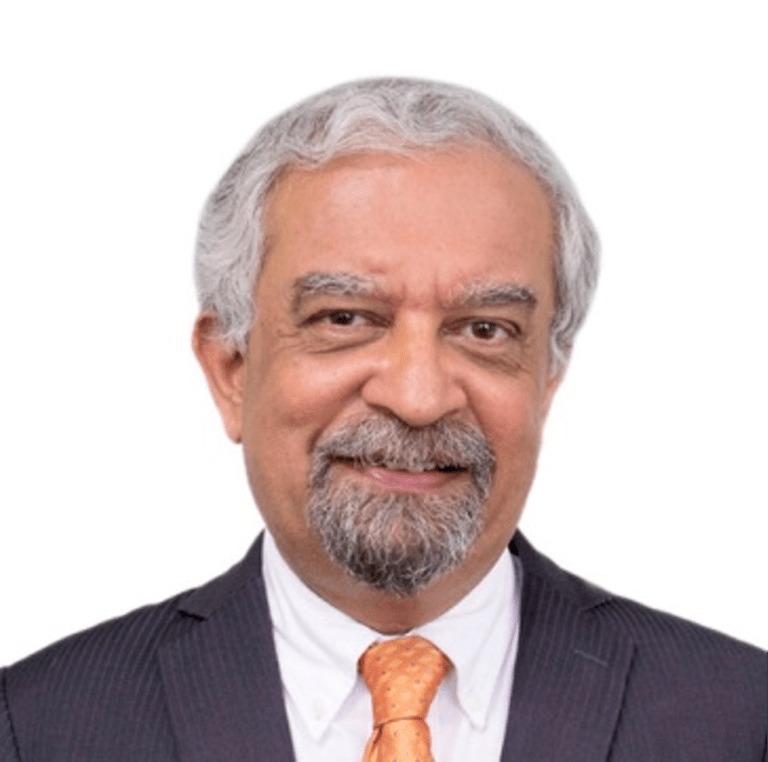
Posted by kind permission of the copyright holder, Mr Kamal Malhotra.