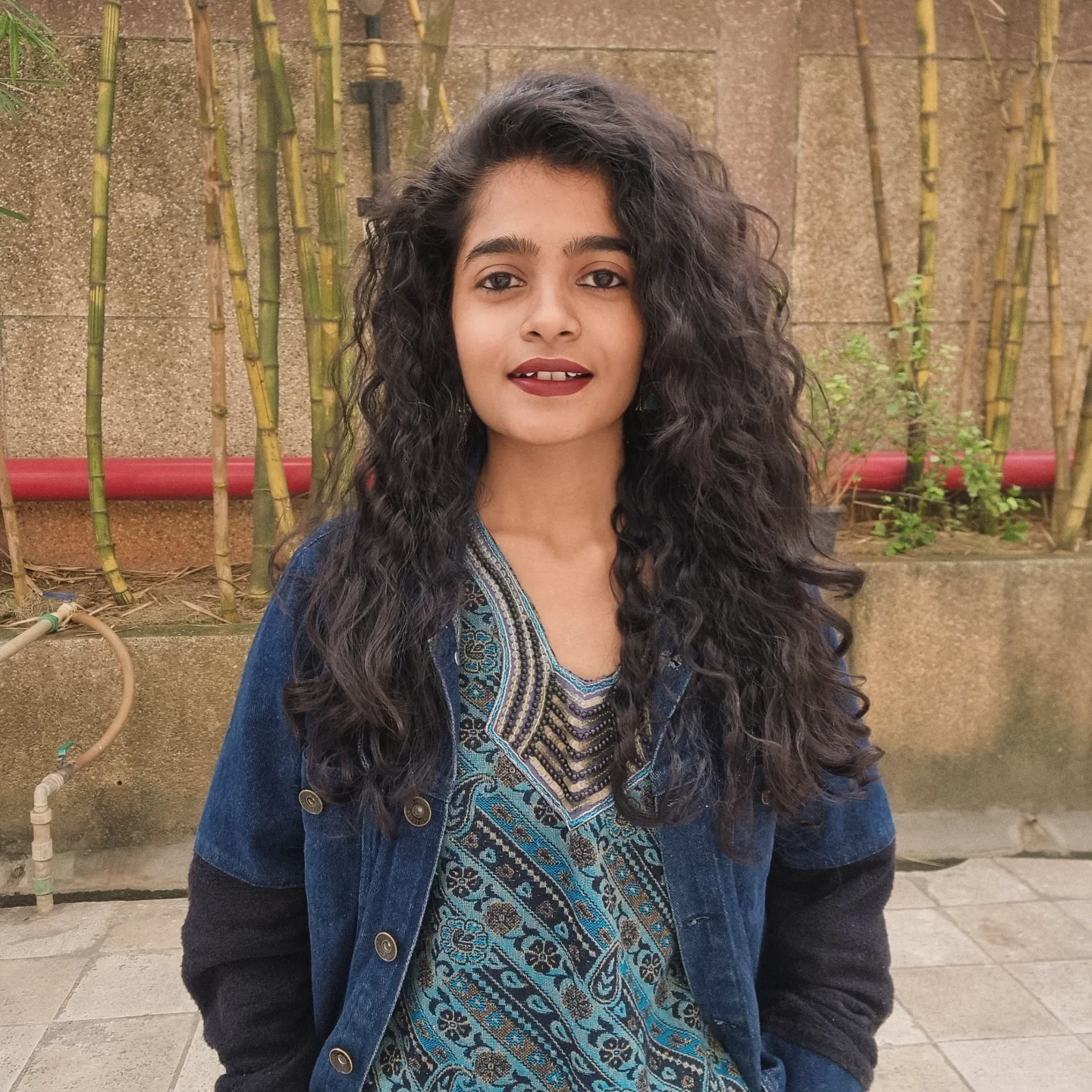
Born in 1966 in Ranchi and educated up to his MA in Gaya, Bihar, Tabish Khair did a PhD from Copenhagen University and is now an associate professor at Aarhus University, Denmark. His scholarly books include Babu Fictions (OUP, 2001), The Gothic, Postcolonialism and Otherness (Palgrave, 2009), Literature against Fundamentalism (OUP, 2024) and the co-edited anthology, Other Routes: 1500 Years of African and Asian Travel Writing (Indiana UP, 2005). He is also an award-winning poet and novelist. His recent novels are Just Another Jihadi Jane (published as Jihadi Jane in India), A Body by the Shore and Night of Happiness. He has completed a new novel, Drown All the Refugees, scheduled for publication by HarperCollins in late 2026.
In this edition of In Conversation, Tabish and I delve into the idea of the self and the other. In other words, into how people define themselves by contrast with those they see as different. We discuss the democratic act of reading and writing and reflect on the place and purpose of writing in a world that feels perpetually ablaze. Tabish speaks candidly about his personal relationship to writing, the instincts that shape his process and the so-called ‘rules’ of writing.
Samiksha: Novels like Night of Happiness and Jihadi Jane can be understood as stories of the ‘other’ portrayed through characters who do not fully belong within the worlds they inhabit. However, as the narrative unfolds, judgment gives way to empathy, and these ‘othered’ characters begin to find a kind of belonging within the reader’s imagination.
Who is the other in our world today, and what is the writer’s relationship to the other?
Tabish: This is such a complex and rich question; a proper reply would require a book! But to put it simply, to start with, everyone you face is an ‘other.’ This has to be kept in mind. In order to be a ‘self’, we need to differ from other selves, and in that sense, every self that ‘faces’ another ‘self’, actually encounters an ‘other.’ This is essentially what Emmanuel Levinas says, too. You cannot be yourself without differing from me; not even a daughter can be herself without differing from her mother. There is an irreducible element of difference in every other – you cannot erase that difference without erasing their ‘otherness’, and hence the selfhood of the other. This is the ethical and philosophical core of the issue. Now, when we speak of it in political and other terms, we often talk of the other as a threat or an obstruction. This is the other that is constructed as the negative of everything that we think we are ourselves. So, it could be the colonised for the coloniser, women for sexist men, coloured people for racist whites, working class agitators for capitalists. It can be any ‘other self’ whose difference is constructed from a position of power as a threat and as sheer negativity. Then the attempt is usually to banish or exterminate this other, as Hitler did with Jews, and as extreme Zionists are doing with Palestinians. The writer’s relationship to the other is the same as the writer’s relationship to the world – to address the reality of the other in its difference, to witness the humanity of the other not merely as a negativity or an erasure. This endeavour is at the core of any serious writing, also because it is in our engagement with the other that we end up defining and shaping our own selfhood. So, essentially, you cannot even write deeply about yourself without engaging with the other.
Samiksha: Writing happens from a place of empathy, from stepping into the shoes of another – from the writer’s perspective, then, does the Other with a capital O, even exist?
Tabish: I am very unfashionable in today’s empathetic circles because I keep insisting that the otherness of the other cannot ever be erased. If empathy suggests that I can become the other, or even that I can make the other transparent to my understanding (or in my writing), then I view empathy with suspicion. The other exists in this difference that I cannot reduce to my perception of it, no matter how empathetic I am. Because all I can do, with empathy, is to register the difference of the other, and also register the fact that, at one level, this difference will remain in place. So, as you noted in the first question, I try to suggest the difference of the ‘other, and how it penetrates/impacts my selfhood, or the selfhood of the narrator. I do not make it transparent; I just address this difference that the narrator – and then the reader – has to confront and negotiate. I strive to show a self, looking at the other – and in the process, I hope to expose what can be seen and also indicate what remains, given the irreducible difference of the other, hidden or obscured. I try to register the other’s complex humanity, some of which obviously overlaps with my humanity and can be transparent, and some of which needs to be accessed as a space, a disturbance, a turgidity, a push, a gap, an excess to make me – writer or the narrator, and the reader think and feel differently. That’s all. So, the old colonial Other – the Other with a capital ‘O’ that you are rightly suspicious of – does not exist if it means that the Other is a total darkness, inaccessible and un-addressable. But it exists to the extent that the other – not with a capital O perhaps – can never be considered totally transparent and cannot be reduced to the language of the self.
Samiksha: When you’re writing about difficult and complex issues like Jihad in your novel Jihadi Jane, you present the various influences that could have led to Jamilla’s and Ameena’s radicalisation, while also ensuring that they are not absolved of their responsibility for the same. You explore all the nuances of the issue very masterfully. When it comes to writing about complex matters, what, according to you, is the writer’s position? Where does the writer write from?
Tabish: If I answer this using the terminology of the self and the other that we have employed until now, I would say that this attempt is part of that larger discussion. Not only is the other not fully transparent or the mirror-negative of the self, the other is also not an angel. Neither the self nor the other is an angel. Because the other is also another self for itself, and as a self it is faced by various others. Hence, responsibility remains crucial: it is always the responsibility of the self towards the other. The self is not fixed across time and space – it changes with context – but it is always the speaking/doing/dominant part of the binary. This means the self has a responsibility towards the other. Whoever I encounter as an other is not absolved of this responsibility either. So, essentially the writer writes from a position of responsibility towards the other – and that position implies responsibility towards oneself. That is why I try to make the position of my narrative/narrator as clear as possible. The reader needs to know the angle of the perspective to judge for herself: one of the reasons I like old-fashioned frame narratives!
Samiksha: Since we’re talking about the ability of writing to hold space – not just for the other but also for ideas that are taboo or might seem appalling for one reason or another, I want to know what you think about the democratic nature of writing; and in the process of being democratic, can writing change the world?
Tabish: Writing – or, rather, reading – is essential to democratic thinking. I will even go so far as to say that reading comes first – in this chicken-or-egg matter, the egg comes first! In reading – if you read properly, what Byung-Chul Han calls paying deep attention – you always encounter a difference. Even when you read yourself, because the person who wrote is never identical to the person who reads. More so in most cases – someone else reads what you write or you read what someone else wrote. A person of another place, class, gender, sexuality, nation, ethnicity, period, age, circumstances, tastes, upbringing, history. It is endless. We are talking of reading across differences. And democracy is essentially a matter of working with differences. A world that cannot read well – pay deep attention to books – is a world that will fail to be truly democratic.
Samiksha: In one of your lectures on writing during times of crisis in the Gnosis Lecture Series 2020, you talk about how writing enables us to “say what we cannot say”. Can you elaborate on that and also tell us how one can actually write ‘between the lines’?
Tabish: What I meant was more like ‘suggest’ or ‘face’ that what cannot be said, because of course part of the problem is that we can never fully say what cannot be said, even, actually, exhaust what can be said! And that is where ‘between the lines’ comes in. See, language is not transparent. The same words sometimes mean slightly different things to different people, and moreover, words do not exhaust reality. There is also no one-to-one ‘natural’ correspondence between language and the world outside language. Many aspects of reality cannot be exhausted in words, and aspects can get distorted or at least shaped. Our existence shapes language, but our language also shapes our existence and our understanding of it. Hence, I have always argued that literature does not depend just on the seeming transparency of words (which is often assumed by other disciplines) but also works with a knowledge of its limitations, the limitations of language. That is why literature, unlike a scientific or sociological paper, uses paradox, irony, silence, noise, contradiction etc. This calls upon us to read ‘between the lines’ as well as to read the given lines. The deep attention or ‘contemplation’ that reading literature requires is necessary because of this too.
Samiksha: I want to talk about your poetry too. Some of your poems like Couplets in Ice or Immigrant are based on H. C. Anderson’s fairytales, but they are satires. How do you bring these two seemingly very different worlds together so beautifully?
Tabish: I think it just happened. I had been re-reading Andersen’s ‘fairytales’ – I had always been aware of the deep worldly sorrow in them – and when I started writing ‘contemporary’ poems based on them, all the poems ended up highlighting aspects of loss, sorrow and pain. I feel those aspects were hidden in Andersen’s stories too and the current sad – perhaps sadder – state of the world just released them into different contexts. I wrote most of those poems on a train trip to Copenhagen (about three hours) – and I usually cannot write when travelling. I need to be alone in a room.
Samiksha: Is your relationship to writing different as a poet versus as a novelist? How?
Tabish: Poetry is finicky. It can refuse to come. With a novel, I can usually wheedle it into coming with some effort and patience. Also, for me, poetry needs a lot of space – I need to immerse myself almost solely in poetry for weeks, maybe months, before I can start writing poems with any degree of confidence. A novel can be written in periods between reading bank statements, changing diapers, giving lectures, reading stale and stiff academese, and correcting exam papers. But this might just be because of the kind of poetry I prefer, and hence try to write.
Samiksha: I also want to explore your personal relationship to writing in general. When did you first start writing? Did you follow any rules? Are there any rules in writing?
Tabish: It pays to be born with very few talents. I think the only thing I could do reasonably well was to write. I realised this around the age of 10 or 11 when I wrote my first poems, thankfully destroyed later on, and then just went on. I think the rules of writing vary from writer to writer. I do not have any hard and fast rule, as I have too many other responsibilities. If I made rules (like, say, write every morning) for myself, I would be forced to break them by circumstances and people – and that would depress me. I do dream of being able to do nothing but write. Have dreamt of it for decades. This has not been possible until now, as I have had to earn a salary, but it might happen when I retire soon – one part of me looks forward to it, and another part is frightened. What if having too much time would be worse than having too little time?
Samiksha: We spoke about writing in times of crisis. These days the world is in a perpetual state of crisis and before we overcome one, we’re already drowning in another. In such times, is there any room left for writing so to say, ‘without a purpose’? Can we afford to write for pleasure anymore?
Tabish: For me, reading comes before writing, and a world without real reading is a world on its way to hell in a handbasket. And hence, in my view, writing is absolutely necessary today. As for pleasure and purpose, the two can be separated in various kinds of writing, but in good literature – real literature, I would say – they always go together. A literary work needs to offer some kind of pleasure for the reader to carry on and discover its purpose. And, in my mind, purpose is also necessary for any real pleasure – just as one needs to bite into an apple in order to enjoy its taste.
Samiksha: Finally, what advice would you give to a young writer?
Tabish: Three. 1. Writing is not a profession, but a vocation. 2. Don’t write because you want to, but because you have to. 3. Ignore any advice by an older writer that does not suit you.
Samiksha: Tabish, you have given our readers and me a great deal to reflect upon. Thank you so much for sharing your time and insights – it has been a real pleasure.
Tabish: What more can a writer want but an engaged and perceptive interviewer, and then hopefully readers who care? Thank you.