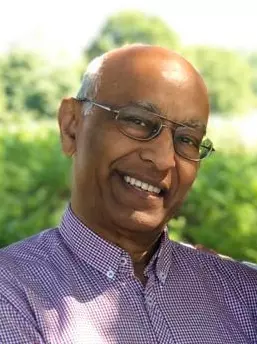
As sole proprietor of Salt Desert Media/ Pippa Rann Books, why do I publish things with which I disagree? It is worth noting that I do so primarily where I feel that the work communicates a point of view that is soundly argued, well expressed, and should be heard. Let me explain that in the following way: Do I agree with the Dalai Lama? Not always. Do I agree with the Pope? Hardly ever. Do I think they are nice men? Yes. But being asked if someone is a nice person is a substantially different matter from being asked to evaluate whether what he or she has just said is valid or elegant. Terrible people have said things that are true. Really noble people have said at least a few things that are rubbish.
Then it is worth noting that I publish what I disagree with because, if I published only what I agreed with, I would only publish myself! And even I myself now disagree with some of the things I thought right earlier! Naturally, I hope that I have come to sounder conclusions since then. But I am entirely open to coming to still sounder conclusions in future.
Third, and most important, I publish what I disagree with because I am committed to the value of debate and discussion. I want to encourage people to come to their own decisions. And I want to see the creation of a culture which supports people in following clear thought through to the best choices.
All that is based on the value of informed freedom of thought as well as on the value of freedom of action. Those are essential values of any true aazaadi – which was the whole point of our independence struggle.
Those are also the values of the Indian Constitution – in other words, those are the criteria for what constitutes India, defines India, makes India what it is and what it should be – and, of course, therefore also indicates what it should not be.
Whenever we forget those values, we erode or subvert aazaadi and contribute to building the prison of some new kind of gulaamgiri. We have anyway continued with the ancient gulaamgiri we had to those who are rich, those who are manipulative, and those who are merely powerful.
But is it not the danger of aazaadi that it ends up being the supremacy of mere individuality, of individual self-indulgence? Should there be no space for duty, for care of others? Of course there should. In fact, as a result of the values and the thinking of the generation that fought and won our independence, the values of duty, care, and service are also enshrined in the Indian Constitution. Let me sum up my understanding of the Constitution in this statement: The whole value of aazaadi is to become a genuinely mature and free individual who freely chooses to care, to the extent of one’s capacity, for the majority of our people who still remain poor, disadvantaged, and therefore are not yet really aazaad.
Is that a slightly extreme statement? Please make up your own mind after considering the following.
The Constitution was the fruit of nearly 3 years of discussion, debate and intellectual labour over every one of the original 395 articles, in which some 3.6 million words were spoken by 274 people ( including women, 210 were elected from the provinces, 64 were nominated by the princely states, and the whole process was led by a Dalit – Babasaheb Dr B. R. Ambedkar).
Notably, the process was led by a Dalit not out of any wokeness or political correctness, but because he was clearly the best educated person in India – the most competent person for the purpose (B.A. from Elphinstone College, University of Bombay; M.A. and Ph.D. in Economics from Columbia University, New York, USA; M.Sc. and D.Sc. in Economics from the London School of Economics; Barrister-at-Law from Gray’s Inn, London, UK; proficient in nine languages – Sanskrit, Persian, Pali, Marathi, Hindi, Gujarati, German, French, and English; on top of which he had systematically studied perhaps as many as 64 subjects including world religions. In our own time, the distinguished economist Narendra Jadhav (himself the recipient of some 70 Indian and international awards) said that Ambedkar was “the highest -educated Indian economist of all times”.
We respect Babasaheb Ambedkar, the most highly educated Indian of his own generation, because he didn’t focus his learning and other abilities simply on making money for himself, he didn’t use those abilities to acquire power others or lord it over others, he didn’t use those abilities to manipulate others. Rather, in taking on the responsibility leading the whole process of forming the Indian Constitution, Dr Ambedkar put his immense learning and personal abilities into encouraging and then bringing together to everyone’s satisfaction the results of the discussion and debate about what should define our nation and how it should conduct itself. He used all his abilities and experience to enable a large and learned body of men and women to come to the best possible conclusions, and to enable those theoretical conclusions to be followed up with the right actions in the service of the nation. Why did he do that? So that India could have the best possible framework for enabling individual freedom and creativity which could be focused not on self-indulgence but on building up the nation – which of course includes the poorest and most disadvantaged of our people.
That is why we should all live a lifestyle that shouts not only “Vande Mataram”*** but also the even more popular Urdu slogans, “Aazaadi zindaabaad” and “Inquilaab zindaabaad”, which rang much more throughout India in street-level activism.
So why do I publish those whom I don’t agree with? Because, in my poor, weak, dim and distant way, I am trying to follow the example, not just of Babasaheb Ambedkar, but of that entire generation of freedom fighters who, in spite of disagreeing about many things, still agreed on the essence of aazaadi – that is, freedom.
_
*** Only two stanzas out of the original six in Bankim Chandra Chatterjee’s 1870s poem were adopted as India’s national song. A “song” is not as important as “the anthem”. In our case, the song and the anthem were adopted on the same day, 24 January 1950 – and India is the only country in the world to have both a national song and a national anthem. The Bengali title of Chatterjee’s poem did become a slogan that was revered, but it was used more often in writing, in speeches, and in ceremonial contexts. By contrast, on the streets and among the people, throughout the country and the national movement which spanned the globe, the most popular slogans, by far, were “Aazaadi zindaabaad” and “Inquilaab zindaabaad”.